
— THE EXECUTION INTELLIGENCE SYSTEM™
A practical architecture for understanding and strengthening execution under pressure.
Where leadership meets execution — and empowers organisations to thrive.

They invest in strategy workshops, change initiatives, leadership development, culture surveys, and performance systems.
Each addresses part of the problem. But execution remains fragile when the wider conditions are not considered together.
The Execution Intelligence System™ treats execution as an architectural capability — not a program, not a personality trait, and not a one-off initiative. It strengthens the conditions required for execution to work reliably across leaders, teams, and the enterprise.
Most organisations approach execution indirectly.
— THE APPROACH
— THE SYSTEM
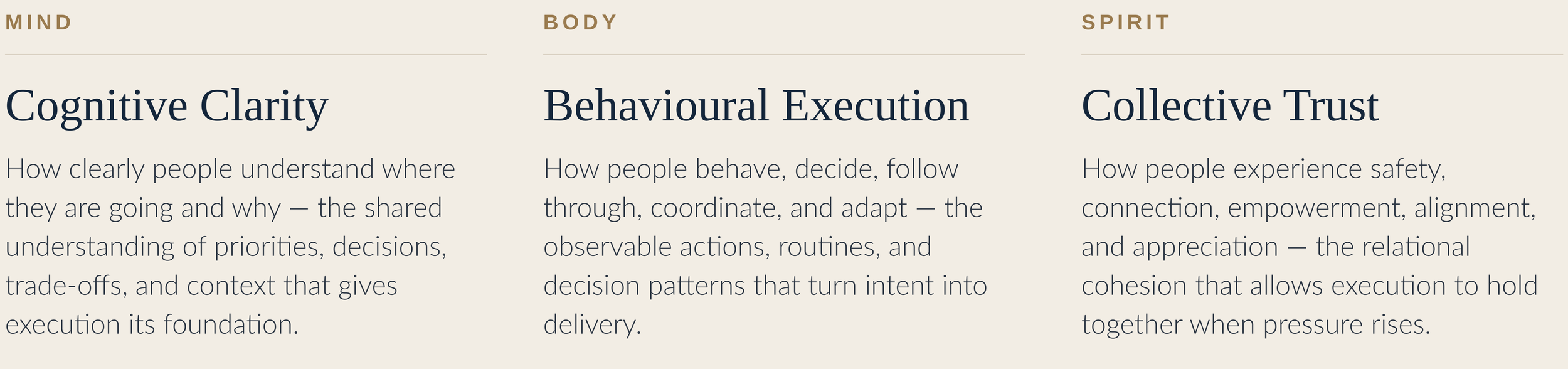
The Human Logic of Execution.
When clarity directs behaviour, behaviour earns trust, and trust stabilises both — execution becomes durable.
Execution is usually treated as a matter of process or performance. In practice it is deeply human — shaped by how people think, act, and trust one another under pressure.
The system begins with three human dimensions of execution that are often treated separately:
This human logic operates through the core architecture and across Leader, Team and Business Intelligence.
— THE KEY ELEMENTS
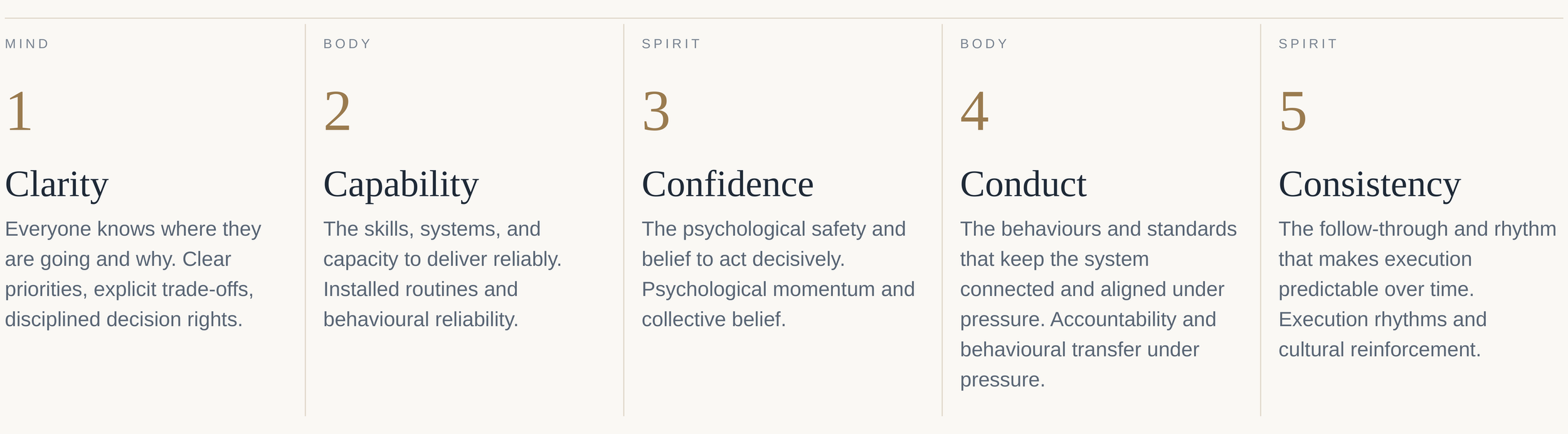
The core architecture has three integrated elements: the five execution conditions, the Trust Spine and the three Intelligence Layers.
The 5Cs describe what must be present for execution to work; the Trust Spine shows what allows it to hold together; and Leader, Team and Business Intelligence show where execution strength or fragility sits.
Weakness in any one condition can degrade the wider system.
The Core Architecture.
— THE TRUST SPINE
Without trust, execution slows. With trust, execution holds.
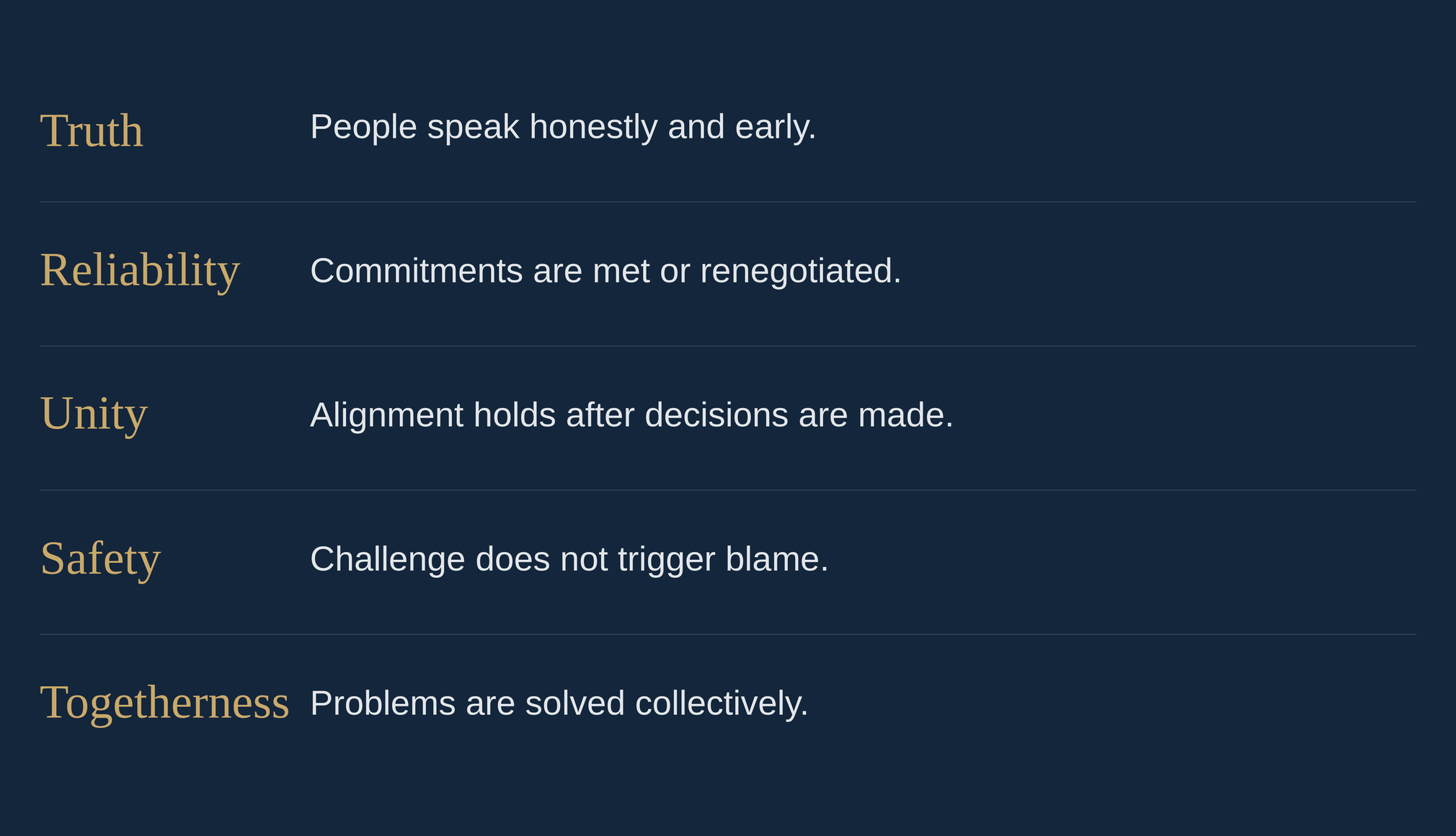
The Trust Spine is the binding force running through the execution conditions and Intelligence Layers. Trust is also measured through five distinct dimensions. A question may contribute to a Condition, a Trust dimension, both, or neither, depending on what it is designed to assess.
The system operates across three Intelligence Layers: Leader, Team and Business.
The same five execution conditions and Trust dimensions are examined across these layers, helping identify whether execution strength or fragility is primarily leadership-related, collective or structural.
— DIAGNOSTIC INTEGRATION
The Execution Intelligence System™ is diagnostic-led.
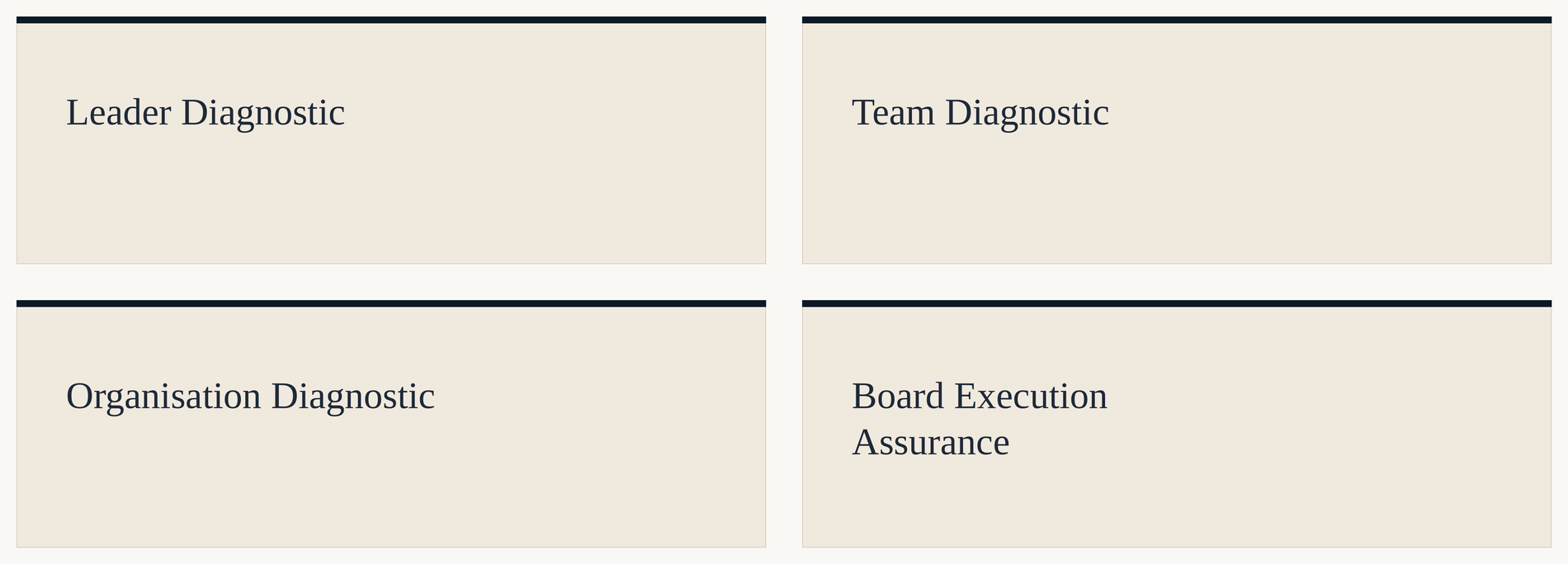
The system is measured through four diagnostics, each producing an evidence-based profile of strengths, constraints, patterns and recommended next steps.
— Each Diagnostic Produces
— A clear execution capability score.
— A Trust Spine profile.
— A visible map of strengths and vulnerabilities.
— Defined intervention priorities.
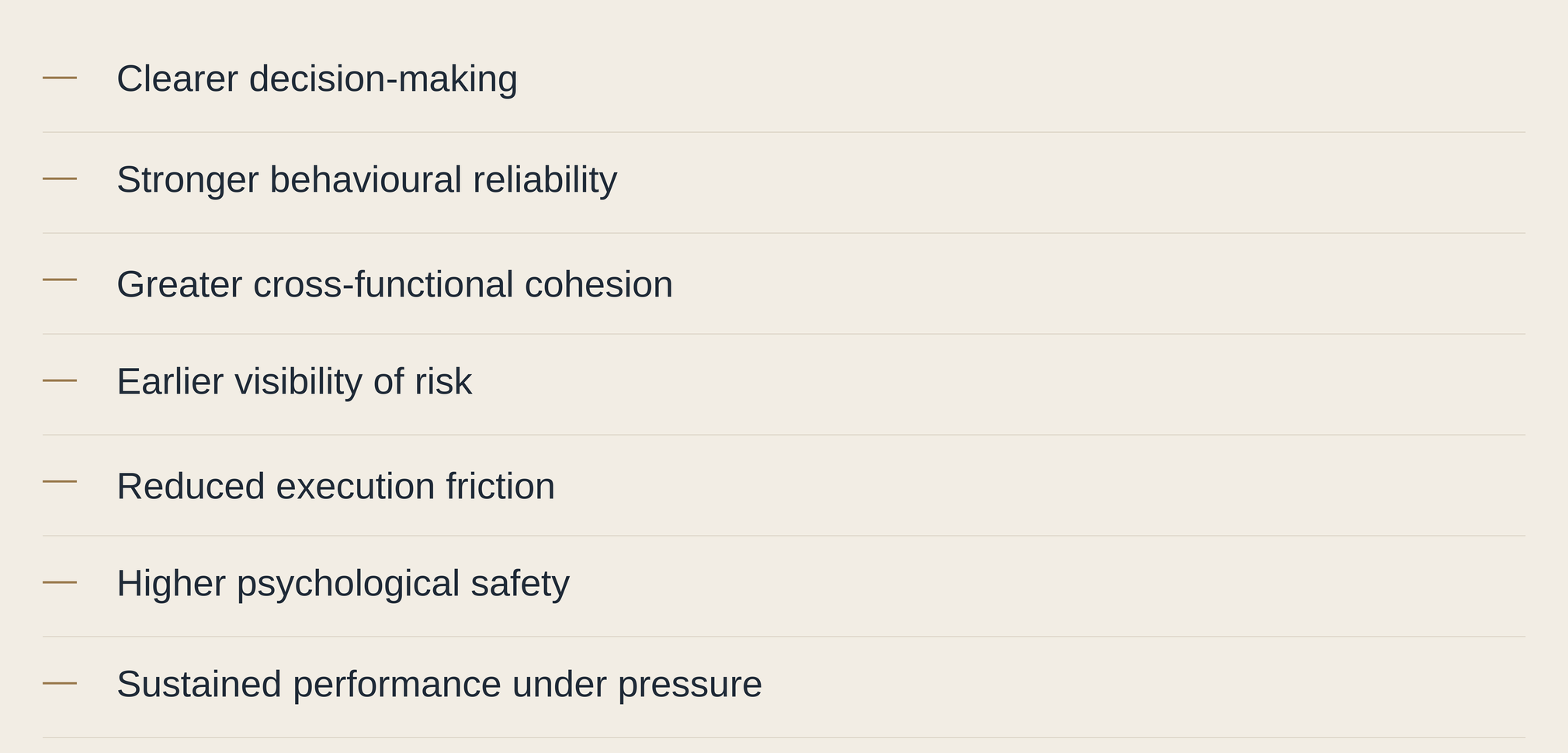
Execution fragility becomes visible early — before outcomes degrade.
Pathways are selected according to where execution is weakest and what the diagnostic reveals
— HOW THE SYSTEM IS DEPLOYED
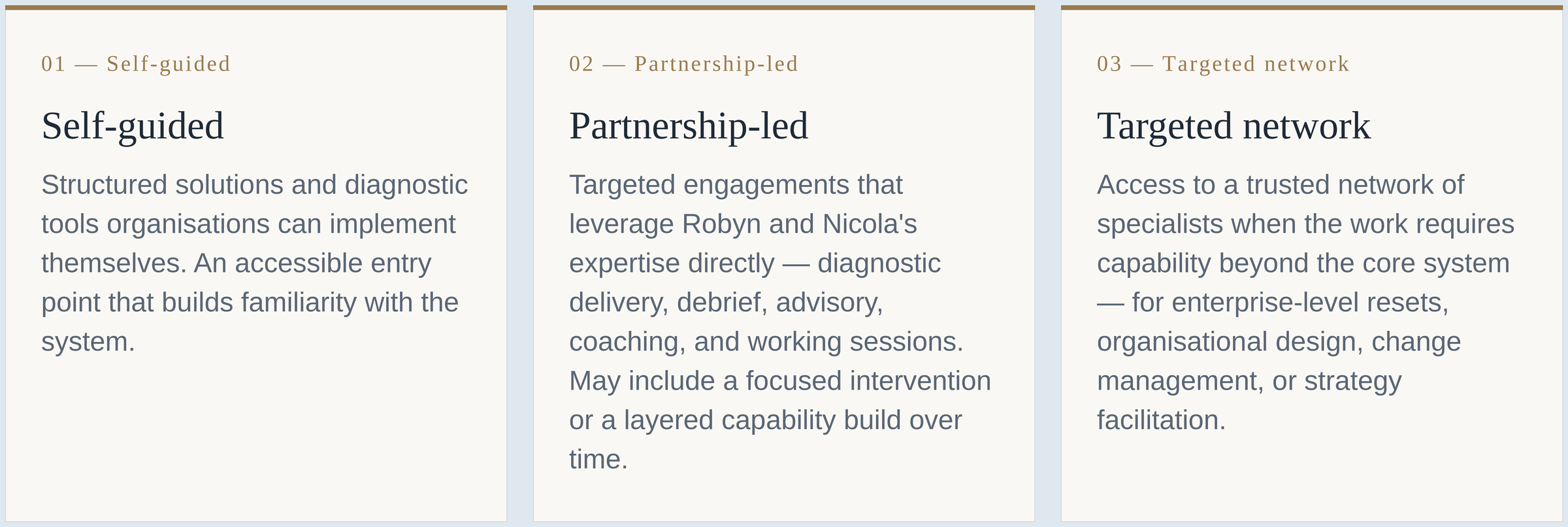
Programs are applications of one architecture — not disconnected offerings.
— WHAT MAKES IT DIFFERENT
It examines how execution conditions, trust and organisational layers interact.
The Execution Intelligence System™ does not treat execution as only a business, leadership, culture or process issue.